EpicFehlReader
Edison Thomas Pt. 2: Fun Facts!
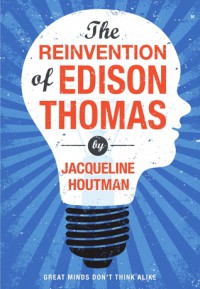
The Reinvention of Edison Thomas - Jacqueline Houtman

I thought I would share some of the fun facts that Eddy Thomas pulls from his "Random Access Memory" Bank in the novel The Reinvention of Edison Thomas. Author Jacqueline Houtman says in her author interview at the back of the book that she was very careful to double check fact check all the facts used in the book, just to be sure of accuracy. There are many more than the ones I've listed below here, these were just some of my favorites from the book:


"The loudest noise ever heard by human ears (in recorded history) was the eruption of the volcano Krakatoa in Indonesia on August 27, 1883. The sound was heard 3,000 miles away, and shock waves from the explosion circled the earth seven times."

*Krakatoa pictured above


"Even though tomatoes (Lycopersicon esculentum) are associated with Italian food, tomatoes are native to South America and were not introduced to Europe

until the early 1500s."


"Tooth enamel is the hardest substance in the body."


"Dry cleaning is not really dry. It uses a toxic liquid called perchloroethylene. A newer, more environmentally friendly method uses supercritical carbon dioxide."


"The male duck-billed platypus (Ornithorhynchus anatinus)

has poisonous spurs on its ankles."


Happy learning, y'all! 

Review
3.5 Stars
Review | The Reinvention Of Edison Thomas by Jacqueline Houtman | Autism Awareness Month
The Reinvention of Edison Thomas - Jacqueline Houtman

Eddy's a science geek and has problems communicating with others. The combination gives the class bully, who pretends to be Eddy's friend, plenty of ammunition. Eddy Thomas can read a college physics book, but he can't read the emotions on the faces of his classmates. He can spend hours tinkering with an invention, but he can't stand more than a few minutes in a noisy crowd, like the crowd at the science fair, which Eddy fails to win. When the local school crossing guard is laid off, Eddy is haunted by thoughts of the potentially disastrous consequences and invents a traffic-calming device, using parts he has scavenged from discarded machines. By trusting his real friends, Eddy uses his talents to help others and rethinks his purely mechanical definition of success.

Amazon.com


Middle grader Eddy Thomas is a science geek and inventor. He likes to dumpster dive for spare parts to make these inventions. His favorite band is They Might Be Giants because their lyrics incorporate actual science. He doesn't like people touching him and he hates loud noises. He recites the Periodic Table of Elements whenever he feels himself getting scared or anxious about anything. Some might call the kid "quirky". His uniqueness ends up making him a target for a lot of bullying. Surprisingly, the bulk of the tormenting comes from Mitch, who was once good friends with Eddy when they were just a few years old. But as they got older, Mitch seemed to put more value on being considered popular than a good friend. Strange thing is, everyone sees Mitch's behavior towards Eddy for what it is except Eddy himself. 


While I don't think it's said outright, the descriptions of Eddy's behavior suggest that he likely has Asperger's Syndrome. He admits that reading facial expressions is incredibly difficult for him and sarcasm is usually lost on him. He instinctively wants to take everything at face value, so he can't understand why Mitch could wish ill-will towards him when they've known each other so long. What else can they be except friends? But over the course of the story, Eddy develops new friendships with people who show him what true, healthy friendships should consist of. 


This story is geared toward the middle-grade reading age and while it might not be the cup of tea of any reader of that age, I think it will highly appeal to those who love science, trivia, fun facts, that kind of thing. The scenes in this novel are broken up by facts from Eddy's memory, which he cutely refers to as his RAM or Random Access Memory (computer joke /reference). I personally really enjoyed Eddy's sense of humor. Though Eddy says he doesn't "get" sarcasm, he's actually pretty good at self-deprecation!


One of the moments that cracked me up most was when Eddy was working on a history assignment where he was asked to write a biographical essay on an important historical figure. Well, nearly everyone in Eddy's family is named after famous Thomas's and as you might have guessed, Eddy's namesake is none other than the inventor Thomas Edison. While Eddy initially prefers to choose someone else to write about, time crunch concerns cause him to go with the easy pick. As he reads about Edison though, he finds he and his namesake actually had a good bit in common. What unsettles him is Edison's propensity for fires unexpectedly starting around his work. Eddy makes the observation that for a guy who accidentally started so many fires, it's a wonder he was not the inventor of smoke detectors or fire extinguishers!


"Ms. Johnson is a real stickler for showing work.

"I know, but I showed all the work I did," protested Eddy. "I do not know how I could have shown more."


"Let's have a look." Justin snatched the paper out of Eddy's hand. "Here, for instance, number 3. That one was complicated. You should have written down the intermediate steps."


"What intermediate steps? I wrote down everything."


"Holy snap! You're not telling me you did that in your head!" Justin's mouth gaped open.


"Sure." Eddy shrugged.


"How?"


"I just see it in my head."


"Like the numbers on a calculator?"


"Not really," Eddy paused to think. He had never tried to explain how he did math. "Things just sort of group themselves into patterns in my head and I rearrange them. Everyone does it that way, right?"


"Well, I sure don't."


While I couldn't help but cringe at the bullying traps Eddy unwittingly walks into, I had to cheer when he comes to a point of embracing who he is, quirks and all. It's beautiful when anyone of any age gets to have that moment in life! :-)

Review
3 Stars
Review | The Newsmakers by Lis Wiehl
The Newsmakers - Sebastian Stuart, Lis Wiehl

TV reporter Erica Sparks has become a superstar overnight. Is it due to her hard work and talent, or is she at the center of a spiraling conspiracy? Erica Sparks is a beautiful and ambitious reporter who has just landed her dream job at Global News Network in New York. And while it was hard to leave Jenny, her cherished eight-year-old daughter, in the custody of her ex-husband, Erica is determined to succeed in the cutthroat world of big-time broadcasting. She can only hope her troubled past won’t come back to sabotage her dreams. Although the wounds from her divorce are still fresh, Erica can’t deny the chemistry between her and her new producer, the handsome and empathetic Greg Underwood. But a relationship is the last thing she wants right now. On her very first assignment, Erica inadvertently witnesses—and films—a horrific tragedy, scooping all the other networks. Mere weeks later, another tragedy strikes—again, right in front of Erica and her cameras. Her career skyrockets overnight, but Erica is troubled. Deeply. This can’t just be coincidence. But what is it? Erica will stop at nothing to uncover the truth. But she has to make sure disaster—and her troubled past—don’t catch up with her first.

Amazon.com


Television journalist Erica Sparks is fresh off of a divorce while still trying to break glass ceilings in the male-dominated field of news broadcasting. She's plucked from her small New Hampshire station and recruited to come work for an up and coming cable network in New York City. Her first assignment out in the big leagues, she nabs an interview with visiting royal, Kate Middleton. While waiting to meet the Duchess of Cambridge for their interview near the harbor, Erica and hundreds of other people witness a ferry crash right in front of them. Shaken but not deterred, Erica scraps the planned interview with the duchess and instead plunges into a weeks long investigation on what might have caused that crash. What she discovers goes farther than she could have guessed, bringing up ties to cyber-terrorism and possibly even Mafia connections. Everyone she starts to associate with during her investigation ends up either dead or near death. She also starts to sense that the more she digs up, the more her new boss tries to keep her away from the truth, instead trying to lure her with the stuff of her wildest dreams -- her own cable show, a yearly salary in the millions, jaw-dropping real estate options. Just the sort of life situation reboot she's craving in her life, but can she trade her morals and need for the truth in or to obtain it?


When I was first getting to know Erica in this story, she felt like a mash-up of Veronica Corningstone from Anchorman and Michelle Pfeiffer from Up Close & Personal with a little bit of the sweetness and humor of Rachel McAdams from Morning Glory. And much like in that news network kind of film, she is instantly pitted against already-established NYC news anchor Claire Wilcox. At first, Erica tries to defuse Claire's competitive cattiness with small town charm but it doesn't seem to take her too long to drop the small town and embrace her new big city edge. Still, I couldn't help but smile at Erica's decision to go to the Correspondent's Dinner wearing a gown designed by a friend and red paste clip-on earrings she found on Etsy. Can't take the girl outta... 


Even though Erica had her moments of likeability for me, the edge and thriller aspect I think this story was trying to go for seemed faint. Much of the focus was Erica stressing about the details of her divorce or making dinner plans with a cute co-worker she starts dating. People in the story would tell her her journalistic instincts were brilliant, her stardom set to skyrocket, but I don't know... I found those instincts a little meh myself. Especially when she's trying to track down the Irish real estate woman. She's given a list of company names and the very last one she thinks to check out is Celtic Home Realty? Really, girl?!


The biggest thing that brought my rating down for this one was the writing felt a little stiff and bland and there was too much telling rather than showing. But the dialogue though. The dialogue was SO BAD. So bad. The flow of the banter felt stilted at times and the witticisms just weren't landing for me. Too forced. The moments of flirting too cheezy. Yes, flirting is supposed to be a little on the silly side, I know, but you know when you've heard the kind that goes too far and makes you cringe. And who gets right into their Gulf War experiences on a first date?! Just felt weird and over the top.


The mystery part of the series, as far as Erica trying to discover the cover-up was decent enough, but a little cliche in parts. Apparently, this book is the first of what's intended to be a series, though I'm not sure this one left me pumped enough to eagerly anticipate the next installment. 


FTC Disclaimer: TNZ Fiction Guild kindly provided me with a complimentary copy of this book in exchange for an honest review. The opinions above are entirely my own. 

Review
4 Stars
Review | The Land Of Later On by Anthony Weller
The Land of Later on - Anthony Weller

Kip—a New York jazz pianist whose career was cut short by a neurological disease—returns from a failed suicide attempt with a vivid, detailed memory of his journey through the afterlife. Resembling the world as he knows it, but unlimited in space and time, it’s unlike any eternity he has contemplated. Its residents are those who choose not to reincarnate, which would erase all memory of who they once were. Kip has a quest: to find his beloved Lucy, a yoga teacher who shared his apartment for years but died of leukemia before he took his own life. Is she still here? Has she waited for him, or “gone back” to become someone else? In his odyssey across centuries and locales (Istanbul to the Marquesas Islands, India to Oklahoma and New Guinea) to find her, Kip is guided by Walt Whitman—who urges him to write this memoir on his return.

Amazon.com


Kip is a NYC jazz pianist who gets diagnosed with MS (multiple sclerosis). A few years into trying to rebuild his life around his progressively degenerative state, he loses his longtime girlfriend, Lucy, to leukemia. Beside himself with grief, tapped out on any will to go on, Kip decides to end his life before MS does it for him. Arriving on "the other side", he finds himself in The Land Of Later On, what our author here names the afterlife. Neither Kip nor Lucy had any strong religious beliefs about what happens post-death while they were alive, but Kip is now determined to try to track down Lucy and hopefully reunite with her here in this seemingly perfect eternity. But is it so perfect as it seems? Each new resident of the Land Of Later On is provided with a sort of guidebook to their new surroundings (think the manual from Beetlejuice, basically). It seems like a helpful read at first, but Kip's new friend -- the poet Walt Whitman -- urges him to focus on the subtext. Turns out one might be subjected to subliminal messaging even in heaven. 


Kip first meets Whitman in what seems like a celestial facsimile of the building Lucy was living in when they first met. Except Lucy is nowhere to be found and Kip doesn't recognize the young guy living in her apartment as the famous poet because here on Earth we have old Whitman so embedded in our image banks. But Lucy was a fan of his work and ended up striking up a bit of a friendship with him not long after she arrived in Land of Later On. But Lucy arrived with a bad case of amnesia, so she set off to try to regain any sense of the familiar. Whitman offers to help Kip track her down and so they set off on a fun journey across the heavens which takes Kip time traveling through numerous exotic locales. Yep, in this heaven you can time travel back to any time period you desire. How cool is that! Their first stop takes them through 1960s Istanbul where Whitman says just for funsies he often sits in on / audits a college course that focuses on his life's work :-P


Kip later finds himself transported back to the land of the living, where Whitman had said, if the opportunity presented itself, Kip should write a true account of what to expect, not the ulterior motive filled manuals going around now. Which is what the novel actually opens with. Kip back on Earth writing what he remembered right before he plans to go back... same way he went the first time. He has to be with Lucy, wherever that is, by whatever means.


That was my Lucy, and the fact that I could stroll any Manhattan thoroughfare with her and notice how other men did not notice her made her even more beautiful in my eyes. Not out of possessiveness, but rather a pride that I could see who she really was. A woman to admire, learn from, and infinitely desire, even as my fellow masculine slugs had not the slightest idea who was walking jauntily past... thanks to her, I had an idea of what I was worth, no matter how little the world might've chosen to pay me.


I eat up these afterlife type stories! Probably influenced by my love of ghost stories or anything paranormal, really. It's just fun to see how many different heaven scenarios all these different authors can think up. Usually there's one aspect here or there where I think, "nah, I wouldn't enjoy that" but it's all part of the fun in the escapism. I especially enjoyed the world building in this novel. Seriously, if I get there and they actually do have time travel in heaven, good luck convincing me to get reborn! I'll be having too much fun! ;-)


I also loved the voice of Walt Whitman here. I think Weller captured his poetic voice really nicely, yet also gave him a great sense of humor. Some of the novel's humor as a whole might strike some readers as being a bit on the dark side, but a bit of gallows humor is right up my alley, personally. I also think anyone who has experienced chronic illness can probably understand that it kind of comes with the territory... that whole laugh to keep from crying idea.


This novel felt similar in some respects to Richard Matheson's What Dreams May Come, some similar plot elements, somewhat similar in tone. There's not quite as much action here and it doesn't get quite as dark as that novel, this one has a bit more quieter, introspective feel to it but it was done in a way that never bored me. Perfect little read for a rainy day in! 


POTENTIAL TRIGGER WARNING: Plot mentions suicides / suicide attempts of one or more characters. 

Review
3 Stars
Review | If I Run by Terri Blackstock
If I Run - Terri Blackstock

Casey Cox’s DNA is all over the crime scene. There’s no use talking to police; they’ve failed her abysmally before. She has to flee before she’s arrested . . . or worse. The truth doesn’t matter anymore. But what is the truth? That’s the question haunting Dylan Roberts, the war-weary veteran hired to find Casey. PTSD has marked him damaged goods, but bringing Casey back can redeem him. Though the crime scene seems to tell the whole story, details of the murder aren’t adding up. Casey Cox doesn’t fit the profile of a killer. But are Dylan’s skewed perceptions keeping him from being objective? If she isn’t guilty, why did she run? Unraveling her past and the evidence that condemns her will take more time than he has, but as Dylan’s damaged soul intersects with hers, he is faced with two choices: the girl who occupies his every thought is a psychopathic killer . . . or a selfless hero. And the truth could be the most deadly weapon yet.

Amazon.com


Casey Cox is forced to flee town when her DNA is found all over the home of her murdered friend, Brent. She wishes she could tell her side of the story but there's a whole murky history around the truth that leads her to believe no one will really hear her out. Rather, they'll want her dead.


Afghanistan war veteran Dylan Roberts, back home after a recent honorable discharge following a PTSD diagnosis, is looking for a fresh start. Unfortunately, he finds most employers, scared off by the PTSD, reluctantly turn him away. But because his former work was that of a military criminal investigator, he does end up finding work as a contracted, outside private investigator for the police department investigating the murder. Additionally, Dylan is recruited by Brent's parents to track down Casey, bring her back to answer for the murder. Dylan's side of the story reveals that he was actually the childhood best friend of murder victim Brent, but the friends drifted apart as they progressed into adulthood. The more facts Dylan uncovers behind Brent's life just prior to his murder, and the more he gets to know Casey through others who knew her and swear there's no way she could be a brutal murderer, the more he starts to suspect a more sinister story someone wants covered up. This suspicion is only heightened as he notices how the police department he's working for seems very determined to keep him on a specific path of investigation. What is it they seem to want to veer him away from?


Crime dramas are far from being one of my go-to genres, so I may not have been the best audience for this kind of story. For me, this one had a mix of strong points and weak spots that left me giving it a right down the middle kind of rating. Good at times, but I don't know how much of it will stick with me if you ask me about it weeks later. I will say I found the opening and closing chapters pretty strong in the writing, it was that tricky part in the middle that was up and down for me.


After those first few chapters, the pace of the plot seemed to slow down noticeably, my attention wandering a good bit as I was reading. For someone on the run, Casey just wasn't selling the intensity for me. There weren't any super nasty bad guys immediately on her trail to keep me anxious while reading, just a lot of her chilling on buses and in seedy motel rooms figuring out her next move. Also, Dylan didn't seem to have to work too hard to catch up with her. It felt like he just had a quick couple of conversations and he was right on her trail in just a day or two. And why did every one of Brent's old friends seem to refer to themselves as his very best friend?!


I think my favorite part of the story was the side story regarding the rescue attempt in the final chapters. THAT had the intensity I kept waiting for! I just wish the rest of the novel had had that feel to it. 


I found myself a little disappointed with Blackwell's "A Note From The Author" in the back of the book. It felt like an unnecessary, awkward rant. What bothered me most though was how she spoke of Christians being villianized and persecuted for their beliefs throughout history yet just a few short paragraphs later slyly knocks atheists and agnostics for their beliefs. As someone who is a strong believer and advocate for the right to religious freedom, that whole kettle / pot business soured me a bit for reading any of Blackstock's books in the future. 


FTC Disclaimer: TNZ Fiction Guild kindly provided me with a complimentary copy of this book in exchange for an honest review. The opinions above are entirely my own. 

Links To Autism Support & Awareness Groups
In a Different Key: The Story of Autism - John Donvan, Caren Zucker

As some of you may know, April is Autism Awareness Month and as I myself have a cousin who has non-verbal autism, I try to do a collection of reviews on Autism / Asperger's books (both fiction and non) each year. One such book I was asked to review was a recent release, In A Different Key: The Story of Autism by John Donvan and Caren Zucker -- both are correspondents for ABC News -- both with family members with autism. This one's a chunker (nearly 700 pages!) of a microhistory read but proved to be damn informative! My review I will post separately but below I have listed, for reference for anyone looking for this kind of information, some links to support groups and other organizations mentioned in this book. Just click on the name to go to the website :-)


 Autism Speaks (combined on website)


    *also under the Autism Speaks umbrella:

        --- NAAR (National Alliance for Autism                  Research)

        --- Cure Autism Now!

        --- ACRE (Autism Coalition for Research & Education)


International Society for Autism Research

        --- hosts yearly International Meeting for Autism Research


National Autism Society aka Autism Society Of America, originally known as National Society for Autistic Children


National Autism Association

ASAN (Autism Self Advocacy Network)

GRASP (Global & Regional Asperger's Syndrome Partnership)

TEACCH (Treatment & Education of Autistic or related Communication Handicapped Children) -- *I know that doesn't spell the acronym right, but that's what it's suppose to stand for

AGRE (Autism Genetic Resource Exchange)

Autism Science Foundation

Autism Services Center

Autism Research Institute

       --- ran Defeat Autism Now! program until program was discontinued in 2011

WrongPlanet.net (Asperger's Syndrome support community)


Bonus


Movies featuring Autism or Asperger's Syndrome:

**************************************************************


Rain Man (a film inspired by real life savant Kim Peek)


Temple Grandin (biopic of the life of real life autistic scientist Temple Grandin) -- SO good! It was nominated for 15 Emmy Awards (it was released through HBO), ended up winning 7 of them! In the book A Different Key, it's mentioned that Claire Danes only spent one afternoon talking with Temple Grandin prior to filming the movie, yet Grandin herself felt Danes nailed the performance. Grandin was also moved to tears the first time she watched David Straithairn's portrayal of her favorite teacher, Dr. Carlock. 


Portrait of an Autistic Young Man (PBS documentary -- couldn't find a purchasing / viewing link, only info... may have to see if it's available through your local library)


Son-Rise (based on a memoir by the same name)


Change Of Habit (yes, the Elvis Presley movie strangely enough! but he plays a doctor working with autistic kids in this one, among other things)


House of Cards -- *not the Kevin Spacey series, the Tommy Lee Jones film


Hear The Silence (BBC drama inspired by the vaccine scare triggered by comments made by Dr. Andrew Wakefield -- currently available to view for free on Youtube ... for now)


   >>> If you're not familiar with the story, here's the "Cliff Notes" version: In 1998, Dr. Wakefield was a gastroenterologist working at London's Royal Free Hospital where he found himself with a dozen cases of children, 3-10 years old, who were coming in with severe intestinal discomfort or inflammation. Of those cases, he noticed many of the children seemed to display autistic qualities. Further testing showed all these children had traces of the measles virus in their intestinal tracts. Looking more in depth at the medical histories, Wakefield found all the children had been given the MMR (Measles Mumps Ruebella) vaccine -- the patient is basically given three vaccines in one syringe.


It was later on at a press conference that Wakefield made a statement that after doing further research on the matter, he had developed the hypothesis that the MMR vaccine as it was then being administered was possibly too potent for the developing systems of some small children, causing the gut to become inflamed. Inflammation in the gut could then lead to inflammation in the brain which then might trigger autistic behavior. He reiterated thought that it was JUST a hypothesis and that he was NOT advocating avoiding vaccines together. He thought vaccinations were important but, in the name of safety first, recommended that maybe parents look into having family physicians the split up the vaccines & given in a staggered fashion over the course of months, to give the body time to adjust to each dosage. Unfortunately, many still took the message as "Vaccines cause autism!", developing into the divisive Vax / Anti-Vax stance argument still going on today. 


Unforgotten: 25 Years After Willowbrook (documentary also available free to watch on Youtube)

Review
3 Stars
Review | In A Different Key: The Story Of Autism by John Donvan & Caren Zucker
In a Different Key: The Story of Autism - John Donvan, Caren Zucker

Nearly seventy-five years ago, Donald Triplett of Forest, Mississippi, became the first child diagnosed with autism. Beginning with his family’s odyssey, In a Different Key tells the extraordinary story of this often misunderstood condition, and of the civil rights battles waged by the families of those who have it. Unfolding over decades, it is a beautifully rendered history of ordinary people determined to secure a place in the world for those with autism—by liberating children from dank institutions, campaigning for their right to go to school, challenging expert opinion on what it means to have autism, and persuading society to accept those who are different. This is also a story of fierce controversies—from the question of whether there is truly an autism “epidemic,” and whether vaccines played a part in it; to scandals involving “facilitated communication,” one of many treatments that have proved to be blind alleys; to stark disagreements about whether scientists should pursue a cure for autism. There are dark turns too: we learn about experimenters feeding LSD to children with autism, or shocking them with electricity to change their behavior; and the authors reveal compelling evidence that Hans Asperger, discoverer of the syndrome named after him, participated in the Nazi program that consigned disabled children to death. By turns intimate and panoramic, In a Different Key takes us on a journey from an era when families were shamed and children were condemned to institutions to one in which a cadre of people with autism push not simply for inclusion, but for a new understanding of autism: as difference rather than disability.

Amazon.com


At nearly 700 pages, this is perhaps one of the most comprehensive books out there right now that cover the whole history of autism as a diagnosis. It opens with an introduction to Donald, the very first person ever officially diagnosed with autism. While not entirely non-verbal, he was pretty close at the start. He found peace in patterns and could easily slip into tantrums if things were not just so. On the flip side though, his love of patterns led to a discovery of his incredible sense of recall. At the family doctor's urging, Donald's mother agreed to have him institutionalized. This was during a time when upon arriving at an institution, children would often immediately have personal possessions confiscated, instead provided with communal toys and other materials, and be changed into a "uniform" of tank top and shorts. The stays were not permanent, typically only lasting up to 3 months at a time, 9 months at most. Donald, however, ended up staying at one such place for over a year, getting his diagnosis changed almost regularly -- everything from glandular disorder to Heller's Disease to schizophrenia.


Donald was later referred to Dr. Leo Kanner, who at the time was working at Harriet Lane Home (a branch of John Hopkins). In 1942, Kanner wrote to Donald's mother, describing Donald's condition now as "autistic disturbances of affective contact, an inability of children from earliest infancy to relate themselves to other people." Though Donald did well in his early years of schooling, thriving on the routine of the school's scheduling of a day, by middle-grade age he was beginning to show signs of struggling academically, so was sent to live on a family friend's farm, his parents hoping that the routine of farm life would prove therapeutic and productive for him. As it turns out, he did thrive on the structure! He was able to return to public school during his high school years and seemed to do pretty well. Though he still struggled with English and History courses, he seemed to have a photographic memory when it came to math computations. Donald also had a nice social life after joining Future Farmers of America, Drama Club and Choir. He got decent grades, was able to graduate and go on to community college courses like any high school kid. 


Kanner became the first doctor to use the term "autistic" in this context, but he did not make up the term himself. In fact, it was already in use in the early 1900s to describe a trait of schizophrenic patients when they would seem to detach themselves from reality, instead becoming consumed with their own inner world. Kanner himself was quick to explain, "I didn't discover autism. It was there before." Also, it wasn't like he just decided to slap a name on his patients' condition one day all willy-nilly. In fact, his decision to label the behavior as autistic was the result of nearly four years of research, collecting data, pouring over case studies, etc. It's at this point in In A Different Key that Donvan & Zucker back up Kanner's words with historical references dating back to the 16-17th century of documented cases of people considered "village idiot" or the like who were most likely actually somewhere on the autistic spectrum. 


One of the other pivotal cases mentioned in this book is that of Steven Tepper. In the 1960s, Tepper was a newborn who had recently developed a case of jaundice. His mother was troubled by the look of him, disappointed that she didn't have a pretty, pink baby. The jaundice eventually passed and Steven did regain his normal newborn hue. However, a few years later, Steven was diagnosed with autism and his mother was told that it developed when children were not sufficiently loved by their mothers. Seriously! Steven's mother was reminded of her thoughts during Steven's jaundice days and immediately felt deep guilt. She was just one of many women who would be deemed "Refrigerator Mothers", after an article TIME Magazine ran in April 1948 ("Medicine: Frosted Children"), referencing Dr. Kanner -- of all people! -- saying that autism stemmed from children being emotionally iced out by their cold, distanced mothers. This completely went against his stance earlier in the 1940s, when he was saying parents were not to be blamed, that it was an innate condition that developed in the brain. When he was later questioned on his change in professional opinion, he struggled to give a clear answer, or either say that he never said any such thing or that his words had been taken out of context. By the 1960s he was trying to go back to his original opinion that parents were not the culprits but people were slow to trust, at least until one speech he gave where he just came out and said in frustration, "Herewith, I acquit you people as parents!"


The "Refrigerator Mother" belief didn't go away for quite some time though, mostly thanks to statements from Dr. Bruno Bettleheim, who still very much preached the theory. He even made an appearance on the Dick Cavett show in the 1970s and upped the theory by one saying that not only was the condition due to the coldness of mothers but also because those mothers secretly wanted the afflicted child dead. A medical professional saying this. UGH! 


Ruth Sullivan, mother to an autistic son, was one to step up and shoot down this theory once and for all. Herself a former Army nurse with a master's degree in public health, her husband an English professor, they believed they were intelligent people who could find the real truth. She became an advocate for developing support groups for parents and families of autistic patients. When she requested reading materials to study up on, she was advised by medical staff not to do any reading on her own, that the material out there would only confuse her. But you're not going to deter a dedicated mother that easily! She eventually found an advocacy partner in Bernard Rimland, a former San Diego locksmith who went on to study psychology at SDSU, later earning his doctorate at Penn State. Rimland, also a parent of an autistic child, saw how gentle and patient his wife was with their son and immediately knew the "Refrigerator Mother" theory was BS. He spent over four years compiling notes on every documented case of autism ever up to that point (at the time, about 230). He spoke with colleagues and even reached out to Kanner and Bettleheim. While Bettleheim turned him away (of course, Rimland was essentially trying to discredit him lol), Kanner was receptive to help. In fact, when Rimland compiled all his work into a book, Infantile Autism, Kanner wrote the foreword.


In the 1970s, psychiatrist Lorna Wing, also the parent of an autistic child, published her book Autistic Children, where she coined the term "autistic spectrum". As she was known to put it, "Nature never draws a line without smudging it," meaning most things tend to fall in a range or gray area of something, so the study of autism would most benefit from the use of a spectrum. Her work with autism later led to Asperger's Syndrome being deemed its own diagnosis, on the spectrum but also given its own distinction. When Wing was first studying Asperger's Syndrome, patients were actually still being labeled "autistic psychopaths". She deemed this too harsh a term with too much negative connotation, so in her notes she chose to refer to it as Asperger's Syndrome, after Hans Asperger, the man credited with first noting distinct differences between what was being considered classic autistic traits and what his patients were displaying. Wing found parents of patients seemed to respond more calmly to a diagnosis of "Asperger's" than when they heard "autism". Her decision to use the Asperger name caught on with other medical professionals. By 1992, World Health Organization included Asperger's Syndrome in their International Classification of Diseases Compendium. In 1993, the American Psychiatric Association got on board and added it to their DSM (autism itself had not been included in the DSM until 1980). The APA ended up dropping Asperger's from the DSM in 2013, stating a lack of concrete evidence that it was actually its own thing. This understandably upset a number of people diagnosed with Asperger's. It still remains absent from current editions of the DSM, everything instead labeled under "Autistic Spectrum Disorder". In the epilogue of this book, the authors discuss how the metaphorical ball has been dropped when it comes to research into adult autism (programs or communities encouraging continuing education, job placement, improving quality of life, etc.), the focus primarily being on treating children, but they do offer some notes on projects currently in the works to remedy that. 


This book gave me a fair amount of history I had never even remotely heard about before! How far this area of medicine has come ... but how far we still need to go, right?! It's insane to think of what the early patients were forced to endure because the science just wasn't there so doctors just basically had to work on superstition and empty theories that ended up ruining the lives of so many. Thank God we've made such strides since then. 


As I've said, this read was definitely an education. I can't deny that. Still, if I'm being honest, I don't know that I could say that it's what you'd call highly readable. It was in parts, but there were also sections where it seemed like information was being repeated numerous times... so I don't feel like this is a solid cover to cover fly-through read. I would still recommend it if this is a topic you want to learn more about, because the facts are definitely covered here. I would suggest maybe reading a chapter or two a day, in between whatever lighter read you have going on at the moment, and give your brain spaces to process what all is covered in these pages. Otherwise it might feel a little overwhelming. I applaud the authors for delving in so whole-heartedly, without this read I would not know just how far back this condition dates! 


FTC Disclaimer: BloggingForBooks.com and Crown Publishers kindly provided me with a complimentary copy of this book in exchange for an honest review. The opinions above are entirely my own.

 

Review
3 Stars
Review | How To Live In Fear: Mastering The Art Of Freaking Out by Lance Hahn
How to Live in Fear: Mastering the Art of Freaking Out - Lance Hahn

In How to Live in Fear, Lance tackles the pervasive problem of fear and panic head-on by inviting readers into his world. In this genuine and practical book, he invites readers into the life of a pastor living with anxiety disorder. Through humorous personal stories—like losing it on an airplane or collapsing onstage as he is about to preach—Lance will win over readers with his transparency. He will also share the remedies that have helped him recover and overcome throughout the years. Lance will show readers that while he may still encounter bouts of panic, he has never let his disorder stop him from living a full life.

Amazon.com


First off, I have to say I was completely charmed by the cover of this book! What a perfect illustration of how anxiety can feel! Okay, just had to take a moment to gush over that.


From the age of six, Pastor Lance Hahn has struggled with chronic anxiety to the degree of fighting through dizziness, blurred vision, even convulsions and fainting. He talks of going through periods in his adult life where the symptoms seemed to only worsen, even after counseling sessions and prescription medication (even having the dosages increased!) to try to control it.


Taking vacations and days off, as well as downtime, is now often viewed as some sort of corporate weakness. "Burning the candle at both ends" seems to be an admirable and expected trait of the driven. This mind-set fuels anxiety. Our addiction to digital devices feeds bad news and judgement from all over the world to us all day, every day. We stay in information overload 24/7. How much of the anxiety issues in our society could be eliminated if we would simply slow down, take a break, and find some peace?


Hahn is also open about his struggle with hypochondria. He desperately wanted to escape it all, but how do you get away when the culprit is your own brain? As the saying says... 


People often ask me why, instead of being embarrassed, I'm so confident when I talk about my condition. The short answer is that my identity is not wrapped up in what's wrong with me. Not only is my panic disorder not the sum total of what I am, but I didn't do anything wrong to deserve or receive it. We are all so much more than our dysfunction! My identity, as well as yours, is not centered in the fear.


After years of developing coping methods, he shares his experiences and tips with fellow sufferers. Hahn encourages sufferers to push past the fear of revealing to others their struggles. Yes, it's hard for others to understand what's going inside a person's mind because the pain and struggle is internal, often considered invisible / nonexistent. (It was around this section that he discusses how people readily accept medication for physical hurts, so why be ashamed to try it for emotional pain, right!) But Hahn says openly talking about what you're going through "gives context" to your behavior that may be concerning or confusing others. It also releases some of the pent up power created by that defeatist inner monologue. Additionally, you never know when talking about your experiences may encourage other people with this condition to speak up  or seek help themselves! Hahn recommends using what he calls the Three I's Plan: Identify Your Triggers, Indicate Patterns, Implement A Plan (ie. course of action or treatment).


The very nature of anxiety leads to isolation. Most people do not understand what is happening to us and cannot relate, no matter how much they care. Because the wound is internal, there is no obvious sign of our handicap, so we don't get much sympathy. If we were in wheelchairs, people would allow for our frailties, but because we usually look fine, the sensitivity drains away quickly. It's hard to explain to someone that even if the fear is imaginary, the physical symptoms are real. 


I liked some of the facts that Hahn brings out to illustrate that you are not alone in this condition. As he points out, some of the most creative, most brilliant minds throughout history -- people like Nikolai Tesla, Emily Dickinson, Abraham Lincoln, John Steinbeck, Sir Isaac Newton... even modern celebrities such as Emma Stone, Amanda Seyfried, Johnny Depp and Stephen Fry -- have all had battles with crippling anxiety / panic attacks. Hahn also busts out some statistics that provide some small comfort in showing just how many of us struggle with this condition --- some of the ones that stood out to me: 40 million people (18% of US population) suffer from some variation of anxiety disorder, "the most common mental illness in the US", Hahn explains; Rape, not combat duty, is actually the most common trigger for PTSD in today's world; 36% of sufferers experience symptoms for 10 years or more before seeking help; HALF of people diagnosed with depression are also diagnosed with anxiety disorder. 


To be healthy inside this disorder, our minds simply cannot be allowed to go wherever they want. We need to be in control of the content we dwell on. I know some days in this life are discouraging and hopeless, but do not lose hope. Don't let the conditions of today shape your soul forever. You might be sitting in a trial right now, but that doesn't have to consume or define you. Just because you have suffered in the past or are suffering now doesn't mean you will always suffer. Lift your head, friend. Salvation is on its way. 


Some of the tips he provides are the obvious ones that come up in most of these kinds of books: stay away from known triggers, get your mind off your anxiety by helping others, make quiet time for yourself a priority, try journaling, exercise, seek professional counseling. Other tips he offered I didn't entirely gel with (I don't know how successful I'd be at refusing to deal with any problems after 8pm). But there were some pointers he brought up that did get me thinking. For one, I liked that he got into the difference between sympathy and empathy. An important distinction, I think, as many believe them to be synonymous. I also liked his idea of pausing in bad moments, evaluating the situation and asking yourself, "What released the Kracken?" I think the importance of levity in painful situations is highly underrated. I'm all about embracing my dark humor to push through the dark times :-)


It had a fair amount of good bits I'll take away from the reading, but I don't know if Hahn's particular writing style overall is for me. There was something to the tone that, to me, came off as overly cheery, forced joviality. Then again, that's maybe just my own jaded nature taking it that way lol. 


FTC Disclaimer: BookLookBloggers.com & Thomas Nelson Publishing kindly provided me with a complimentary copy of this book in exchange for an honest review. The opinions above are entirely my own. 


Review
4 Stars
Review | The Yoga of Max's Discontent by Karan Bajaj
The Yoga of Max's Discontent - Karan Bajaj

In this captivating and surprising novel of spiritual discovery—a No. 1 bestseller in India—a young American travels to India and finds himself tested physically, emotionally, and spiritually. Max Pzoras is the poster child for the American Dream. The child of Greek immigrants who grew up in a dangerous New York housing project, he triumphed over his upbringing and became a successful Wall Street analyst. Yet on the frigid December night he’s involved in a violent street scuffle, Max begins to confront questions about suffering and mortality that have dogged him since his mother’s death.
His search takes him to the farthest reaches of India, where he encounters a mysterious night market, almost freezes to death on a hike up the Himalayas, and finds himself in an ashram in a drought-stricken village in South India. As Max seeks answers to questions that have bedeviled him—can yogis walk on water and live for 200 years without aging? Can a flesh-and-blood man ever achieve nirvana?—he struggles to overcome his skepticism and the pull of family tugging him home. In an ultimate bid for answers, he embarks on a dangerous solitary meditation in a freezing Himalayan cave, where his physical and spiritual endurance is put to its most extreme test. By turns a gripping adventure story and a journey of tremendous inner transformation, The Yoga of Max's Discontent is a contemporary take on man's classic quest for transcendence.

Amazon.com


The Yoga Of Max's Discontent was originally published in India in Summer 2015 under the title The Seeker. This novel was inspired by author Karan Bajaj's own experiences after taking a year's sabbatical to travel across Europe and India, staying in various ashrams and studying numerous forms of meditation and yoga. The Seeker became a bestseller in India and is now scheduled for a May 2016 release (through Riverhead Books, a branch of Penguin Random House) here in the United States, under the title The Yoga of Max's Discontent


In this novel, Max Pzoras is a man of Greek heritage who has spent his life trying to escape his impoverished roots. Having grown up in a New York City housing project, he worked hard to become a well respected Wall Street analyst. The combined mental strains of watching his mother slowly succumb to cancer AND coming away from an altercation with a mentally unbalanced homeless person one night propel Max into a new way of thinking. He starts seeing the world around him in a new, more jaded light. He becomes more aware of the human race around him being full of signs of fraility, resignation, and ultimately mortality. Grieving the loss of his mother and weighed down with thoughts on his own mortality, Max realizes it's time to reboot his whole way of life. He quits his job, leaves New York and embarks on a sort of pilgrimage across India to seek out spiritual gurus who can hopefully provide answers to his concerns and questions while teaching him on all matters related to life, death, finding nirvana, etc. Max also contemplates possibly working toward becoming a yogi himself. 


Getting to his end goal is not as clear cut as it might sound. His first few days in India prove to be a bit of a reality check that shatter his rosy perception of the place. As it turns out, the people Max meets in India also have desire to be somewhere other than where they are. Imagine his surprise, traveling all this way for answers, when new friends he meets there want to leave to travel to his U.S., hopefully to escape getting trapped in a job at one of India's many customer service call centers. All the characters here seem to be looking wistfully at that other side of the fence, no matter where they are! Bit of a life truth snuck in there, eh? :-)


Max's new friends encourage him to seek whatever he is after but do warn him that the majority of the "gurus" that Americans and Europeans flock to are really just hacks. But it's worth it to seek that one true one that will be able to offer the guidance you need.


"Pilot Baba's ashram," said the man, pointing to a cluster of white houses scattered next to the statue. "If you want, you can stay here until the winter ends."


"Is he a guru?"


"Everyone is a guru in India," said the man witheringly. "Pilot Baba was just a regular pilot in the Indian Air Force. His helicopter crashed here and he had some sort of spiritual realization -- perhaps that there is more money to be made in this racket than in flying planes. So he became a guru."


Max laughed. "How did he find disciples?"


"No shortage of foreigners touring exotic India," he said. "Pilot Baba teaches that man loses his ego during orgasm, so there is plenty of sex here. Westerners love it. Spiritual McDonalds."


"And the men with painted faces and red marks?"


"Lord Shiva's devotees," said the man. "If I smoked as much hashish as them, even I'd see God everywhere."


So Max proceeds on ... only to be stopped by one traumatic event after another. He survives a near bus wreck, gets trapped in a hailstorm, lost in a snowstorm, suffers hypothermia, freezing temps. He even nearly falls off the edge of a glacier at one point! That's just in the first few months! As you can imagine, he considers turning back a number of times but something always propels him on. 


The majority of the action and adventure happens early on in the book, while the later parts are more about Max reflecting on what he's come to learn as his journey progresses. A thinking man's novel, you might call it. I think one of the aspects I enjoyed the most was how author Karan Bajaj works in his symbolism. It's never shoved down the reader's throat, but instead gently woven in through scenes of Max's battles with his environments throughout different points in the story. For instance, there is a scene where Max is climbing through a portion of the Himalayas and he seems to be constantly fighting twisted roots, fallen boulders, even uprooted trees. Just when he's at his most frustrated, something compels him to look up and it's then that he notices a beautiful blue, cloudless sky. Appreciating the beauty of the day he hadn't noticed before, he also gives silent thanks for the clear sky allowing the sun's rays to reach and warm him on an otherwise chilly day. So, on a casual read that would just seem like a guy hiking, but looking deeper it gets the reader thinking about how sometimes you just need to pause and look up from what's troubling you to see all the things going RIGHT that can motivate you to continue to persevere.


When not struggling with the elements, Max also finds sometimes the biggest thing holding him back in life is himself -- his endless mind chatter, his tendency to berate himself over past mistakes or just general poor choices. But the important thing he takes away is that sometimes there are important lessons in those mistakes, lessons that maybe a person couldn't learn except through trial by fire. Max also comes to the realization that sometimes in life, certain things present themselves only at the moment they're meant to and not before. Tough lesson for all us impatient humans, right? :-)


So, definitely a good bit of food for thought in this novel! The couple knocks I would give it would be regarding the sex scenes and the profanity -- not for them being there, but for the way it was done. Regarding the profanity, I could see where it was part of a character here or there, but at times it did start to feel like it was used more than necessary... which got to be a little tiresome. As for the sex scenes (there are only a couple, and brief at that), they didn't bother me except for the fact that they didn't seem to fit into the flow of the rest of the story. I understand the concept of a man on a spiritual journey most likely struggling with what might be considered his baser desires... my issue with Max was just how his sudden need to throw down always seemed to pop up at really bizarre times, with very little lead up to these incredibly brief sessions. Like I said, just felt a little unnatural in the flow of the rest of the story. 


I enjoyed Max's journey and all the symbolism and life ponderings along the way. I don't know if this novel will find an appreciative audience with any and all readers though. I would primarily recommend this book for readers who have a strong interest in yoga, meditation, karma, chakras, past lives or general New Age topics, as this novel does get pretty heavily into those areas of thought. 


FTC Disclaimer: Author Karan Bajaj contacted me by email and kindly provided me with a complimentary e-copy of this book (via NetGalley) in exchange for an honest review. The opinions above are entirely my own.


 ---------------------


Extras


Readers interested in learning more about meditation techniques or yoga practice can find tips and video courses through Karan Bajaj's website, which you can peruse here


Review
3.5 Stars
Review | Stillwater Saints by Alex Espinoza
Still Water Saints - Alex Espinoza

Still Water Saints chronicles a momentous year in the life of Agua Mansa, a largely Latino town beyond the fringes of Los Angeles and home to the Botánica Oshún, where people come seeking charms, herbs, and candles. Above all, they seek the guidance of Perla Portillo, the shop’s owner. Perla has served the community for years, arming her clients with the tools to overcome all manner of crises, large and small. There is Juan, a man coming to terms with the death of his father; Nancy, a recently married schoolteacher; Shawn, an addict looking for peace in his chaotic life; and Rosa, a teenager trying to lose weight and find herself. But when a customer with a troubled and mysterious past arrives, Perla struggles to help and must confront both her unfulfilled hopes and doubts about her place in a rapidly changing world.

Amazon.com


In the fictional town of Agua Mansa (just outside of Los Angeles, California), when problems arise -- family, romantic, health, what have you -- the citizens go to see local healer Perla Portillo at her shop, the Botanica Oshun. A place where she practices her own special brand of a sort of white magic. Here, Perla has therapy chats with her neighbors  and then customizes a package for them. Usually the package is made up of teas, candles or herb mixes but it varies with the situation. While each client's story has its unique challenges, one man will prove to be more difficult to help than the rest. 


Elderly Perla meets young Rodrigo when he mysteriously shows up outside her shop one day, just observing her for awhile. When he gets up the nerve to speak to her, he asks her to teach him how to speak English better. Perla is a little surprised by the request but is concerned about the somewhat sickly look the boy has, not to mention the numerous, mysterious burn marks she spots all over his body. She decides she needs to help him any way she can but soon finds herself fighting against his elusiveness, his unexplained fear and constant desire to flee at any moment. In the process of trying to help Rodrigo, Perla finds herself having to confront her own inner demons. 


Though this is considered a novel, the chapters almost read like individual short stories. Each chapter focuses on one particular resident of Agua Mansa and their interaction with Perla. Sometimes the chapters are told from Perla's perspective, but all the chapters weave together so as a whole you get to see the inner workings of this small community, with chapters often referencing something or someone mentioned in a previous chapter.


I liked all the diversity within the Agua Mansa community! These chapters have stories of the struggles of inter-racial relationships, the process of transition for one transgender character, there's even a character fighting with infertility. So many minority voices and concerns addressed in this one little story! This novel is also an education in the influence of Catholicism within a Hispanic community, with many of the characters pouring their woes and hopes in prayers to saints  or what might be considered more pagan spirits -- a number of them I've either rarely or never heard mentioned before -- such as Chango, lord of lightning; Orunla, spirit of wisdom and divination; Yemaya, the daughter of the sea, just to name a few. There's also explanation between the difference between Ellegua -- the energy of the universe -- and Elegua, who opens locked doors, thereby opening up possibilities.


I also smiled at the reference to classes being taught about "The Big One": The earthquake that all kids who grow up in the Southern California school system seem to grow up hearing about. I know I heard quite the horror stories at my own elementary school in San Diego about how one day soon there was going to be a huge quake that was going to break off the whole state of California from the rest of the US, making it an island. My mom heard these stories when she was school age in San Diego, my older brother heard it, I heard it, kids now are still getting those stories and it has yet to happen. Not saying it couldn't or it won't, I'm just saying seeing it mentioned in this story made me grin a little simply because of the nostalgia factor, dark as that might sound, lol. 


Note to sensitive readers: There are some scenes in the story with gritty, adult content -- two friends doing speed, watching porn, one man having sex while another man looks on -- just wanted to give a heads up to anyone who wishes to avoid this kind of content. Also, POTENTIAL TRIGGER WARNING: there are also brief descriptions / scenes of rape and self-harm within this novel. 

Review
3.5 Stars
I'm Not Afraid (Sea Kids Adventures #3) by Lee Ann Mancini
I'm Not Afraid! - Lee Ann Mancini

This wonderful-underwater world of vibrant colors shows Susie and her friend going to the Undersea Amusement Park. Susie makes many excuses not to ride the Whale-Back Coaster. After speaking with her mommy and saying a prayer to Jesus, she rides the ride and her fear turns into faith! She learns that praying to Jesus during difficult times, and having faith, is all she needs to overcome her fears. Susie’s friend, Rachel, helps her too and the two of them have a fun-filled day! This is book number 3 in our award-winning series.  It will help children attain Godly moral values, have compassion and love for others, and build a strong foundation in Jesus Christ. 

~from GLM Publishing website


Mancini rolls out a third installment to her Christian fiction series for young readers, Adventures Of The Sea Kids, geared toward teaching children Christian-based morals and values in the context of everyday issues (ie. bullying, overcoming fears, understanding and compassion for those different from you as well as similar, etc). I'm Not Afraid introduces the character Susie Shark. Susie has come to spend the day at Undersea Amusement Park with her friend Rachel the octopus. Susie outwardly says she's pumped to try the Whale-Back, one of the tallest, scariest rides in the park. But inside she is secretly terrified and keeps putting off actually getting on the ride, instead suggesting they get meals, snacks, try other rides... anything to put off getting in line for the Whale-Back. Eventually Rachel catches on and gets annoyed so Susie rushes off to call her mom. Susie's mom assures her that it's fine, everyone has a fear about something. All she needs to do is calm herself and say a prayer for strength and courage to try something new. After trying her mom's advice, Susie finds herself more relaxed and able to fully enjoy the day with her best friend. 


above: these are enlarged images of little background characters

small readers can watch for -- one of my favorite parts

about the illustrations!


Having already read and reviewed the first two in this series, I still have to give props to just how gorgeously illustrated this series is! However, story-wise, I didn't love this one quite as much as the first two. The moral message is great, the way it teaches small readers that saying a calming prayer can help you push past crippling fears, allowing you to be more open to way more potentially amazing life experiences that you might otherwise have missed out on. But the story here just didn't have the same level of adorableness I came to love in the first two books. This one is still way cute though and I'd still highly recommend trying out the series on your little ones! 


FTC Disclaimer: BookCrash.com and GLM Publishing kindly sent me a complimentary copy of this book in exchange for an honest review. The opinions above are entirely my own.

Review
3 Stars
Review | Faces In The Moon by Betty Louise Bell
Faces in the Moon: A Novel - Betty Louise Bell

Faces in the Moon is the story of three generations of Cherokee women, as viewed by the youngest, Lucie, a woman who has been able to use education and her imagination to escape the confines of her rootless, impoverished upbringing. When her mother’s illness summons her back to Oklahoma, Lucie finds herself confronted with the legacy of a childhood she has worked hard to separate from her adult self.

Her mother, Gracie, and her maternal aunt, Auney, are members of the Cherokees’ "lost generation," women who rejected the traditional rural ways in search of a more glamorous life as autonomous working women.

Amazon.com


Faces In The Moon introduces the reader to generations of women within one Native American family and explores the varied feelings between them regarding their culture. While some of the women completely embrace their heritage, others are uncomfortable with it, preferring to present themselves in a more Caucasian way, at least in public. One woman, Gracie, tries to disguise her Native American features by dying her hair blonde, shaving her eyebrows down, drawing them back in. She believes this looks more womanly than her natural look. Her fixation on her looks seeps into her relationship with her daughter, Lucie. Lucie sadly takes a lot of heat from her mom, having to endure statements like "You're plain... better be smart."


Davis was a few wooden buildings, a general store with a bus stop in front, and The Shack, a restaurant specializing in breakfast and lunch. Inside, dozens of white farmers milled around, sitting on stools at the counter or standing in place, drinking coffee and smoking cigarrettes. Aunt Bertha and Lizzie walked past with their heads down and turned away. Lucie hesitated at the window and two farmers looked up and waved to her. Lucie smiled and waved. 


"Don't go encouraging 'em," Lizzie said, taking her arm. "That ain't no place for us."


"Why?" Lizzie asked, incredulous.


"Why? You're different, that's why."


The child thought a moment. "Why?"


"Lordy, you're too little to have all these questions."


"That's just when they do have 'em." Aunt Bertha said. 


Lizzie kept the child by the hand, "Sister, I don't mean to be mean, but people who ask a lot of whys usually end up with hard lives. Ya listening?"


Lucie also battles harsh treatment from her mother's revolving door of boyfriends -- some alcoholic, some abusive. When Gracie becomes deeply involved with one man in particular, the man moves in and things almost instantly become tense between him and Lucie. Not only does Gracie's white boyfriend express racist sentiments toward Lucie, but there is also subtext that suggests that some sort of sexual assault might have been carried out on Lucie. Eventually the boyfriend makes the ultimatum that either Lucie has to leave or he will, so Gracie packs up Lucie and takes her to live with Great-Aunt Lizzie. All the way to Lizzie's house, Gracie is berating her daughter (as well as drinking while driving, btw -- class act, that one) -- cursing Lucie for her "selfish" behavior, telling her, "all you had to do was be nice to him... well, your days of milk and honey are over.."


Lizzie and her husband, Uncle Jerry,  live out on a farm where, for what seems like the first time in Lucie's life, Lucie is able to sleep in a real bed rather than a pallet on the floor, as well as get solid meals and clean clothes every day without fail, not to mention just the overall safe environment a rural farm provides, compared to what Lucie was coming from! Funny thing is, Lucie is surprised to realize that even with all this, she still misses her mom. 


Uncle Jerry went to his radio, and Lucie sat on the floor between the radio and Lizzie on the couch. The old woman sewed and the old man and child listened for every word from the Motorola. Uncle Jerry advised Amos in his schemes, counseled women in the soap operas, knew a fib when he heard one, believed the Shadow was invincible, and always greeted the Lone Ranger with the same objection. "Now whoever heard a Indian named Tonto? There's Frank Sixkiller and George Cornsilk and Murray Bell. But I ain't never heard a no Indian named Tonto."


The child thought it over and one night explained, "Maybe he's an old Indian. Like those Indians in the movies?"


The old man thought it over. "Maybe. He musta been from outta state."


The first part of the story focuses on these early years. Later on it fast forwards into present time when Lucie is now a grown woman and literature professor, embarrassed to ever be reminded of her mother's 3rd grade education. Lucie is called back home when her mom has to be hospitalized for a lengthy time. When not sitting with her mother in the hospital, Lucie spends time at her mom's house, taking care of the place and thinking back on the traumas and heartaches of years past, reflecting on how far things have come.


While this story might not have been the most exciting as far as plot action goes, I did think it was good as a general character study kind of look into the intricacies of a family, how we can't choose our genetic families and how some of us seriously pull short straw when it comes to ideal home situations, but how we can also dedicate ourselves to doing the best for our own lives. Finding ways to make peace with life's disappointments, acknowledging the blessings, however small they might seem. 


As far as specific characters that spoke to me, I think my favorite was Uncle Jerry. Gotta love that he seemed so unruffled by life, one of those unwavering optimists that could easily find joy and humor in nearly anything. Given what Lucie was struggling with in her mind and home life, I think he was the perfect balm to keep her sane and grounded during a really challenging time. Also, given that I have Native American heritage myself, I did enjoy all the jokes made about the dangers of angering a Native woman (the NA women making the jokes themselves, btw) -- "Ain't nobody meaner than an Indian woman that's been crossed." 

Review
3 Stars
Review | Zoology by Ben Dolnick
Zoology - Ben Dolnick

Zoology is the story of Henry Elinsky, a college flunk-out who takes a job at the Central Park Zoo and discovers that becoming an adult takes a lot more than just a weekly paycheck.

~from back cover (paperback edition)


Henry Elinsky doesn't just drop out of college, he flunks out altogether. Awkward living sitch with the parents follows until his older brother suggests Henry move in to his spare bedroom. Well, that doesn't go over super well with the live-in girlfriend of Henry's brother, but she tries to go along with it ... at least at first. After moving in with his brother, Henry takes a job at Central Park Zoo in New York City. At night, he pursues his real passion, performing as a jazz saxophonist. All in all, it's pretty much a coming-of-age kind of story about life's crap giving you a crash course in learning how to grow the f up. 


Henry also meets and crushes on a girl, Margaret, but ... I don't know, to me it felt like Henry got friendzoned pretty quick. Poor Henry. Except, by story's end I didn't like him all that much... but still, sucks to be shot down. It's not that Henry was a bad guy necessarily, I just generally didn't find him all that likeable. He wasn't even written as a likeable slacker type. He's just sort of ... there. Letting life move around him without participating too much. And when it came to Margaret, there were times when his creepy clinger behavior was seriously off-putting. He read into EVERY behavior, like when you give someone a compliment or go on one coffee date and they go and tell everyone you two are totally in a long-term relationship / engaged / already have baby names picked out. I just wanted to shake Henry and tell him to find his chill already. 


One thing I was surprised and disappointed with -- given the title of this novel, the zoo isn't actually mentioned all that much. Most of the plot happens on Henry's off time! The zoo takes a bigger role in the plot near the end when an incident there gets out of hand, but mostly it's just a periodic backdrop. I did like the scenes at the zoo, I just wish there had been more of them. 


Jonathan Safran Foer (author of Everything Is Illuminated / Extremely Loud and Incredibly Close) gives a cover blurb on the paperback edition. I'm a fan of Foer's works so that did play some part in me picking this book up (as it's meant to -- well done, publishers.) I can see why Foer endorsed this book. Dolnick's writing has a feel that is pretty similar to the tone of Foer's works. Also, I noticed that the banter between Henry and his friend Sameer (I believe he's Pakistani?) has a similar feel to that of Jonathan and Alex in Foer's Everything Is Illuminated


The plot had its entertaining and sometimes dramatic moments but it was one of those stories where I kept waiting for it to hit its stride but that never really happened for me. Maybe because Henry never grew on me and he's the star of the show. Also, that ending.. what was that?! I found it so bizarre and unsatisfying. Wish I had ended up liking the story as much as I like the cover art! 


-----------------------


Note to Readers: Just a heads up -- Henry spends much of the story working his way through Tom Clancy's The Hunt For Red October. As you might guess, near the end of Zoology when Henry is finishing up Hunt For Red October, he reveals some spoilers for that book. Just FYI, in case that was on your TBR. 

Review
3.5 Stars
Review | Flygirl by Sherri L. Smith
Flygirl - Sherri L. Smith

All Ida Mae Jones wants to do is fly. Her daddy was a pilot, and years after his death she feels closest to him when she's in the air. But as a young black woman in 1940s Louisiana, she knows the sky is off limits to her, until America enters World War II, and the Army forms the WASP-Women Airforce Service Pilots. Ida has a chance to fulfill her dream if she's willing to use her light skin to pass as a white girl. She wants to fly more than anything, but Ida soon learns that denying one's self and family is a heavy burden, and ultimately it's not what you do but who you are that's most important.

Amazon.com


Ida Mae Jones grew up on a farm in Louisiana, where her father made ends meet through cultivating his own strawberry farm and doing crop dusting runs for other farmers. It was while tagging along on some of those crop dusting flights that Ida first got the desire to become a pilot herself. By the 1940s, Ida's father has passed away and World War 2 is just on the horizon. Following the bombing of Pearl Harbor, Ida's brother, a medical student, decides to enlist as a field medic. He knows Ida's got the itch to fly but begs her to stay home and help care for farm and family. She tries to obey her brother's wish for a time but just feels like she's sitting on her hands while the world seems to be going up in flames. Ida sneaks out to town one day to apply for a position in the WASP (Women's Airforce Service Pilots) program. Once she finds she's accepted she's got to break it to her mom. Ida's mother reluctantly gives her approval for Ida to travel to Texas to start training.


The big secret she's hiding from her new fellow cadets is the fact that she's black, though she believes (or at least fervently hopes) she's light enough to pass as white. Every day she fears her secret being discovered, particularly when a white male instructor takes a special interest in her. Ida also battles against prejudices that stem simply from her being a woman in a man's military. One instructor makes it his personal mission to carry out all kinds of crazy, dangerous schemes to try to get the female pilots to quit. Still, she continues to pursue her dream, inspired by her hero Bessie Coleman, the first African-American woman to earn a pilot's license. 


One of Ida's biggest concerns she struggles to find an answer to throughout the whole course of the novel is which way is the best way to live her life, in regards to her race. She feels that if she stays in her hometown, the best work she can hope for as a black woman in a small Southern town is being a housekeeper. Though she successfully "passed" as white and got into the WASP program, she fears that now she's locked herself into that role, never being able to come forward about her true heritage. Does she walk away from her family in order to pursue her dreams? It's terrible to think that people were, and maybe still are, forced to ask these kind of questions because of unfair, illogical, racist thinking running the world. I think one of the hardest scenes to read in this story is when Ida's mother comes to visit her at the flight school but has to pose as Ida's family maid, so as not to blow Ida's cover as a well-bred white woman. The way Ida has to address her own mother just to keep her secret safe is heartbreaking, but there's also something touching in how Ida's mother would do that for her daughter, if it meant her girl could have the best life possible. But it just hurt to read that passage, the cruelty social expectations put there.

It was also painful to read Ida's mother's speech about how she tries to do everything she can for the war effort -- use ration books, plant a victory garden, save bacon grease for the Army's munitions department -- yet the Army won't put too much effort into trying to locating her son when he goes MIA, because he's black. 

(show spoiler)


The first part of this novel, though good, was a little bit slow for me. It did pick up in the later chapters though, the closer the women got to completing training. I think Ida's visit with her mother at the flight school was the turning point where I felt much more invested in the characters. There's another major event later on in the story where I suspected (at the start of the novel) that something like it might be written in at some point, but actually reading it was still somehow a bit of a shock to me! It is a pivotal moment in the life of Ida and greatly influences her career decisions after that point. 


I liked the distinct differences in all the female pilots Ida meets and works with, and after reading Sherri Smith's Author's Note, I'm keen to pick up more books on the subject. Just some of the interesting factoids that Smith notes:


> WASP crews were used as test pilots on new aircraft technology during World War 2. One scene in Smith's Flygirl, describing one such test flight, was actually inspired by real life WASP Dora Dougherty Strother and Dorothea Johnson who were chosen to test the prototype of the B-26 Maurader, aka "The Widowmaker". Also tested, the behemoth B-29 whose size scared the beheebus outta many a male pilot! It was incredible (and infuriating!) to learn that the brave women of the WASP program, though definitely considered members of the military, were NOT granted full military benefits while they were enlisted. In fact, it wasn't until 1977 when the Carter administration passed the WASP Act that these women and their family members were provided with honorable discharges and / or full veteran benefits. 1977! Also, it wasn't until the 1990s that female pilots were allowed to fly combat missions. Prior to that, female pilots were stuck being glorified test pilots and supply runners, pretty much. Still important work, don't get me wrong, but I can imagine how aggravating it must have been for those pilots, given how many flight hours they put into trying to be accepted as equally skilled as any of the male pilots. 


>The WASP program was disbanded after World War 2. Many of the female pilots simply went back to their old lifestyles, embracing motherhood or taking up jobs as secretaries, teachers, shop clerks. Others who still had the desire to be in the air became flight instructors while yet others took up careers as Alaskan bush pilots. As far as the storyline of Smith's Flygirl, she says that she couldn't find any factual evidence of any African-American women on the rosters of the WASP program, no stories of anyone trying to pass for white ... that was solely Smith's "what if". However, she did find record of one Janet Harmon Bragg, who trained at Coffey School of Aeronautics in Chicago, who did apply for the WASP program but seemed to be turned away solely due to reasons of race. 


>There were two Asian women accepted into the WASP program: Hazel Ah Ying (who was later killed in action when her plane collided with another) and Maggie Gee.


______________________________


Extras 


* Here you can read a letter from a real life WASP who wrote to Sherri Smith after reading Flygirl


* If you want to learn more about the WASP program, you can visit websites Wings Across America or the website for the WASP museum.

Review
4 Stars
Review | Address Unknown by Kathrine Kressman Taylor
Address Unknown - Kathrine Kressmann Taylor

A rediscovered classic, originally published in 1938 -- and now an international bestseller. When it first appeared in Story magazine in 1938, Address Unknown became an immediate social phenomenon and literary sensation. Published in book form a year later and banned in Nazi Germany, it garnered high praise in the United States and much of Europe. A series of fictional letters between a Jewish art dealer living in San Francisco and his former business partner, who has returned to Germany, Address Unknown is a haunting tale of enormous and enduring impact.

Amazon.com


This quick little epistolary novel (only 68 pages!) uses a series of letters between two men to show the progression of Adolf Hitler's rise to power in Germany in the months leading up to World War 2, and how his overall influence over the Germany people came to break up this one particular friendship. Max and Martin start out as friends and business partners of an art gallery in San Francisco, California. Martin, of German heritage, decides to move his family back to Germany. He keeps up social and business contact with Max, a Jew, for a time. Martin's letters speak of the desperation of Germany's impoverished, their frustrations and dissatisfaction with the government prior to Hitler coming in. Of Hitler Martin speaks glowingly, referring to him as "Gentle Leader".


It's after Martin writes of his decision to get involved in local politics that the friendship experiences a shift. Martin's letters increasingly express discomfort with his continued association with Jewish Max, until one letter finally says all further contact must be cut off. Max is confused and heartbroken, writing that he considered Martin to be like a brother all these years they've known each other.... Martin's response letter accuses Max of being sentimental, knocks the entire Jewish race and then essentially ends with"Well, sucks for you, now seriously -- stop writing me."


Max is ready to accept Martin's request, until he gets word that his sister, who is a stage actress traveling across Europe (and who, the letters hint, had a more than platonic acquaintance with married Martin at one point...), her current production taking her to Berlin. He gets a few letters from his sister but then correspondence mysteriously stops. When one of his letters to her comes back marked "Address Unknown", Max writes once again contacts Martin, pleading with him to find her and make sure she's safe. I won't say more than that because it's after this point that the drama amps up pretty quick. 


There's a surprisingly intense story in these few letters! Much is merely hinted at, leaving the reader to make their own connections, which is where I think the intensity of the story lies. This felt especially true with the last 2-3 letters and then the image of the envelope at the very end that again hinted at what might have transpired, given what the reader had learned up to that point. 


Originally published in 1938 in Story Magazine, publisher house Simon and Schuster came around a year later and decided they wanted to publish the letters in book form. Katherine Taylor's husband thought the letters, even as fiction, were "too strong" to be published under a woman's name so they were simply published under Kressman Taylor, a pen name she continued to use for the rest of her writing career. While the story was pretty much an instant success across America and much of Europe, it was actually banned in Nazi Germany (no surprise there, considering...)


If you enjoy World War 2 novels or history in general, this is a great supplemental read that can easily be read in under an hour and gives a sad but thought-provoking aspect to what we know of the era. Highly recommend at least giving it one read! 

Review
4.5 Stars
Review | Not So Quiet by Helen Zenna Smith
Not So Quiet...: Stepdaughters of War - Helen Zenna Smith

""It is such fun out here, and of course I'm loving every minute of it"... tell them that all the ideals and beliefs you ever had have crashed about your gun-deafened ears... and they will reply on pale mauve deckle-edged paper calling you a silly hysterical little girl." These are the thoughts of Helen Smith, one of "England's Splendid Daughters", an ambulance driver at the French front. Working all hours of the day and night, witness to the terrible wreckage of war, her firsthand experience contrasts sharply with her altruistic expectations. And one of her most painful realizations is that those like her parents, who preen themselves on visions of glory, have no concept of the devastation she lives with and no wish for their illusions to be shaken.

Goodreads.com


Originally published in 1930, Not So Quiet is one of those faux memoir style epistolary novels describing the experiences of World War 1 ambulance driver Helen Smith, aka "Smithy". Her story opens in 1915 as she serves in France with a group of other female ambulance drivers. This group includes ringleader Toshington ("Tosh"), a bold, tomboyish redhead; "The BF" or Bettina Fisher, boy-crazy and all about the luxe life; Etta Potter, aka "Etta Potato" who is the team's resident sunshiney optimist, hardly ever bothered by anything except lost hairpins; Skinner or "Skinny", who seems to have a chronic nervousness as well as an overall unhealthy look to her, her skin often appears a tad jaundiced and she seems to be battling something that today might be identified as IBS (Irritable Bowel Syndrome), so the other ladies sometimes joke that if she's not at her ambulance she's probably in the nearest latrine. Then there's "The Bug", as they call her. Helen describes her as "tiny, wiry, tragic-eyed and dark, with a bitter mouth" -- bitter mouth as in appearance, not speech. Helen also points out that The Bug almost never speaks, giving her a mysterious quality that Helen thinks makes the woman the most interesting of their bunch.


It is four weeks since we had a bath all over, nine days since we had a big wash -- we haven't had time. We dare not hot-bath in case we have to go out immediately afterwards in the snow. The last girl who did it is now in hospital with double pneumonia and not expected to live. 


All the women bond over their common dislike of their boss, The Commandant, another female ambulance driver whose job it is to oversee / manage the rest of the crew. Problem is, she has a bit of a superiority complex, leading the ladies to give her an expletive-decorated nickname. The nickname is earned though, through what feels like the Commandant's cruel insistence on keeping the women constantly over-worked with almost non-stop busy work in between ambulance runs, allowing nearly no time for sleep, and having their meals made up mostly of outdated or spoiled food. If someone gets sick or injured, the Commandant pays little attention to it unless it looks like it might require a hospitalization, claiming that illness or injury not requiring hospitalization is "mere female affectation" (remember, this is a female spouting this!)


The novel is essentially just a detailed day to day account of what women in this job might have experienced. Some passages are just of life around camp, while others talk about the politics and common opinions of the day that these women were up against, as well as Helen's observances of the horrors of war -- the physical and mental injuries military personnel endured while their families back home lauded them for "doing their part" for the war effort, making these men and women almost god-like without really understanding the traumas they were faced with on a daily basis. Though a novelization, I found Helen's thoughts to be important food for thought that still holds relevance when considering the sacrifices of service members of today's military. The novel itself is written in an easy to understand journaling voice and is based on the journals of an actual female ambulance driver.


Helen Z. Smith is actually the pen name for Australian writer Evadne Price. Price happened to meet ambulance driver Winifred Young who had journaled her experiences throughout World War 1. Smith was granted access to the journals, holing herself up for six weeks to read all of them and was inspired to write this novel as a result. Also influencing Price's words were the real life memories of her husband, who was held as a Japanese POW for 2 years, and the war classic All Quiet On The Western Front by Erich Maria Remarque (Not So Quiet was written as a sort of female response to that novel). Price's novel was originally serialized in the British newspaper The People (originating in 1881, the paper is still in circulation but is now called The Sunday People) where she worked as a wartime journalist. After being published as a novel, France awarded Not So Quiet with the Prix Severigne award, touting it as "the novel most calculated to promote international peace." It ended up becoming the first of a quintet under the Helen Smith name. {I tried to look up the other titles but had no luck finding any copies of any of the others, but will list them below for anyone interested.}


This book didn't necessarily have me from page one... it was more like one of those novels where I found myself a good chunk of the way through before realizing how invested I had become. I found each member of the ambulance team unique and entertaining to get to know and all the different struggles each woman faced stirred my empathy in different ways. While at times it can be grim -- and even graphic, in parts -- I think this novel would especially appeal to modern day military and EMS workers. Helen's descriptions of having to clean out the back of the ambulances each day, especially! The resonating message throughout is that while war can sometimes be a necessary evil on the path to eventual peace, it's not something to be glorified. As the saying goes, "there are no real winners." Losses are felt on both sides of the equation. This novel brings that reality home. 


_____________________


Extras


The other titles in this book's series (if you're able to find copies):


#2 Women of the Aftermath (**heads up, if you get a copy of the Feminist Press edition(pictured above) of Not So Quiet, there's a spoiler for book 2 in the afterword notes)

#3 Shadow Women

#4 Luxury Ladies

#5 They Lived With Me


Notes on author Evadne Price:


There seems to be some discrepancy on Price's actual birth date. Her birth year is sometimes documented as 1896, other times 1888, but Price's second husband claimed that the year was actually 1901. In addition to her writings, Price also briefly worked as a stage actress and, later in life with the invention of television, a tv producer. She also had a side career as an astrologer for magazines such as SHE Magazine and Australian Vogue. Evadne Price passed away in 1985.